Congratulations! The first step is the hardest but you took it to prepare your business for a digital future. But wait? Why should you trust Digital Switch to handle your project?
Listen to Understand, Not to Reply
A constructive dialogue is key to understand your real needs. When engaged in a conversation, we will never assume and apply active listening skills to assure that we grasp what you are saying.
Keep an Open Mind
George Bernard Shaw wrote “Progress is impossible without change, and those who cannot change their minds cannot change anything.” We couldn't have said it better ourselves. We keep an open mind because we want to change the world with you.
We Care About you and Your Project
Not only do we care about you, your company and your needs; we also care about the projects you entrust to us. We show this care by delivering high quality results.
Say What We Do and Do What We Say
No secrets, no hidden agendas. Our agreements are crystal clear and we stand by them.
We Push Boundaries Together
Implementing a digital transformation is not an easy task. It involves a lot of work and disrupting the status quo. At Digital Switch we like to move limits and push boundaries. A task can seem daunting but we never back away from a challenge.
Driven by Results
When we engage in a mission, we want to make a difference; we want to see our impact. That is why we also provide implementation services besides design and analysis.
Services
There is no single magical formula for "THE" Digital Transformation. In our opinion, a Digital Transformation is always rooted in a business problem. The problem comes first and digital technology is there to provide assistance to solve the issue at hand. At Digital Switch we provide a broad range of services to construct your digital future in a collaborative manner.
Digital Innovation
Technological evolutions occur at such a rapid pace that it can be difficult to keep track of things. Digital Switch can assist you with the identification and implementation of new technologies. Whether you are looking for new hardware solutions such as 3D-printers or software enhancements like Big Data, Artificial Intelligence & Machine Learning or a combination of both like the Internet of Things
Application Development
In the current market every company has become a digital company. Even if you sell physical products, customers expect an app to control their purchases or follow up on their performance. At Digital Switch we can help you find opportunities in the digital field and implement innovative ways on how to expand your business in those new domains.
Process (Re)-Engineering
If your company is not a well oiled machine, you are missing out on opportunities in the market or your operational cashflow might be suboptimal. Digital Switch provides assistance in mapping your processes, analyzing bottlenecks, and optimizing your business processes. Combined with our Digital Innovation and Application Development skills, we can provide an all inclusive service to design and implement your road for the future.
Our Blog
Drone Mobility - Fad or Future?
Posted By: Maarten
Posted On: March 21 2017
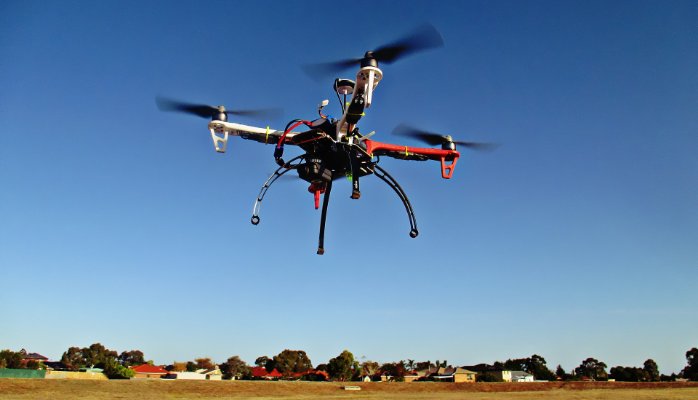
Research in drone technology is taking large steps forward every day. And with each leap made by theoretical and applied research, additional applications seem to become reality. However for the time being there does not seem to be commercial personal drones available and I do not see one on the horizon either. Let us take a closer look at some of the obstacles preventing the real breakthrough and adoption of applied drone mobility.
Research in drone technology is taking large steps forward every day. And with each leap made
by theoretical and applied research, additional applications seem to become reality
(e.g. drone surveillance, automated crop dusting, video drones for sport events, etc.).
One of the applications that draws a lot of attention is drone mobility, where drones or UAVs
(Unmanned Aerial Vehicles) are deployed as a means of personal transportation. However for the
time being there does not seem to be commercial personal drones available and I do not see one
on the horizon either. Sure we have Amazon and DHL who are (almost/already) deploying drones
for delivering packages. But automated air taxis can so far only be hailed in science fiction
movies. Let us take a closer look at some of the obstacles preventing the real breakthrough
and adoption of applied drone mobility.
Legal Frameworks
When we are talking about legal frameworks to regulate drone mobility two aspects come to mind.
First of all there need to be laws that describe the rules that regulate what is and is not
allowed when operating a drone and to which rules drone operators must comply to. At European
level, a detailed state of affairs can be consulted on the website of the European Parliament.
The following is an excerpt of the document
"Being aircraft, drones have to comply with aviation safety rules. International civil
aviation rules adopted since 1944 at United Nations level prohibit unmanned aircraft from
flying over another state’s territory without its permission. In the EU, the current regulatory
system for drones is based on fragmented rules, with many Member States having already
regulated or planning to regulate some aspects of civil drones with an operating mass of
150 kg or less. The responsibility for civil drones over 150 kg is left to the European
Aviation Safety Agency (EASA). However, the extent, content and level of detail of national
regulations differs, and conditions for mutual recognition of operational authorisations
between EU Member States have not been reached"
Secondly the legal framework regarding drone insurance issues also needs to be clarified.
Even for autonomous cars, the discussion on liability in case of accidents is not over, let
alone that there exists a consensus for person carrying drones.
Infrastructure
As is the case with all existing mobility options available, a decent infrastructure is needed
to support them; whether we are talking about land, air, or water transport. A similar effort
has to be made for drone mobility; we need landing spots, recharge stations and parking/storage
space. This type of infrastructure however, does not come cheap. I foresee that the adoption
will be much like the adoption of charging stations for electronic vehicles: the story of the
chicken and the egg comes to mind, which one comes first: automated drones or infrastructure?
There could be a small glimmer of hope over the horizon: electronic vehicles might have paved t
he way for charging stations. Drone makers should perhaps aim to make their systems
interoperatable with existing charging techniques and infrastructure.
Safety & Security
Many new cars that are launched on the European market are subjected to the (non-mandatory)
testing by the Euro New Car Assessment Programme to asses its safety score in case of frontal
and side-impact collisions. For drones to overcome a psychologic barrier in the humand mind to
be labeled as safe, they will also need extensive crash testing and safety measures (e.g.
redundant motors, mandatory parachute, etc.).
A major threat to the credibility of drones are cyber attacks. Image that mid-flight the
automatic pilot announces: "Route to new destination calculated". A bit puzzeled you ask
"New destination?", to which the autopilot responds "The new destination is classified
information." Probably the next few minutes you will desperately try to override the autopilot
and whishing that the engineers had focused more on the cybersecurity of your drone, but to no
avail: your drone is taken over by malicious hackers. While cybersecurity might not be high on
the agenda of drone engineers (what good does it serve to have an unhackable drone if it can
not fly stable in the air?), it is none the less an important issue that engineers need to address.
Technology
While it is undeniable that drone technology has made large leaps of progress, there are still
technological hiccups that need to be sorted out before drones for personal mobility can be
deployed on a larger scale:
Batteries
The modern world would look a lot different if it weren't for batteries. In fact one of the
biggest fear of our modern society is to have the our cell phone die on us. In the context of
mobility, batteries are also waiting for their big breakthrough; first as the power source of
electrical cars. But for now in a car the battery has found its master in traditional fuels. It
can neither match its range nor its refill time: charging a battery still takes considerable longer
than filling up the car with petrol. The adoption of drones largely depends on the invention of
affordable battery technology that packs a bigger punch without the disadvantages that current
technologies have. The Nature journal features an interesting article about the evolution of
battery technology and what to expect in the near future.
Standardised technology
Are you old enough to remember the battle between VHS and Betamax (and more recently HD DVD vs
Blu-ray)? Or ever had your iphone battery die out only find Android chargers nearby? Lack of
interoperability in the tech industry can be a bitch. In the coming years we will see similar
battles for car charging and battery technology. According to IndustryWeek: "A decade ago, The
National Institute of Standards and Technology (NIST) estimated that the automotive industry
wasted $5 billion annually due to the lack of interoperability. And for years, the automotive
industry actually has established an organization, the Automotive Industry Action Group (AIAG)
to focus on standards between OEMs and suppliers."
How about doing it different (and better) for autonomous drones? The industry needs a coordinating
body to promote dialogue and even force alignement between different technologies. It will save
money for all parties and speed up the adoption of drones.
Autonomous flight
We all know that Google has a car up and running that can drive completely autonomously (even
quite decently). And also the traditional car manufacturers such as Audi, Daimler, Ford, Nissan
and Toyota are experimenting with driverless technologies. In fact one of the spearpoints of
drone mobility is the ability to allow them to fly solo to the destination of your choice.
While the promise of fully autonomous cars is just around the corner (if the legal framework
can follow!), actual real-world experience of both autonomous cars and automated package delivery
by drones will speed up the development that is needed for autonomous flight.
Mindset
Last but not least, adopting true drone mobility is still hindered by ourselves. Would you ever
consider giving up your car? Seriously. Perhaps to please your "environmental ego" you might have
considered a hybrid car. And it might have even crossed your mind at some point to use the public
transportation for all your transport. But those thoughts were probably driven by the idea to
adopt a more environmental friendly lifestyle i.e. lower your carbon-dioxide emissions. When
drone mobility is to get a real adoption, you should go one step further. Drone technology is
still new and quite expensive (the Ehang 184 is a one person drone and is estimated to cost
between $200,000 and $300,000) so owning one might be a bit of a stretch. Thus the real barrier
you need to cross is letting go of the idea of beign an owner and start being a sharer. Why not
prepare yourself for the future and start with a car-sharing scheme?
Contact Us
If we have sparked your interest or you have a project you would like to discuss, don't hesitate to reach out to us!